
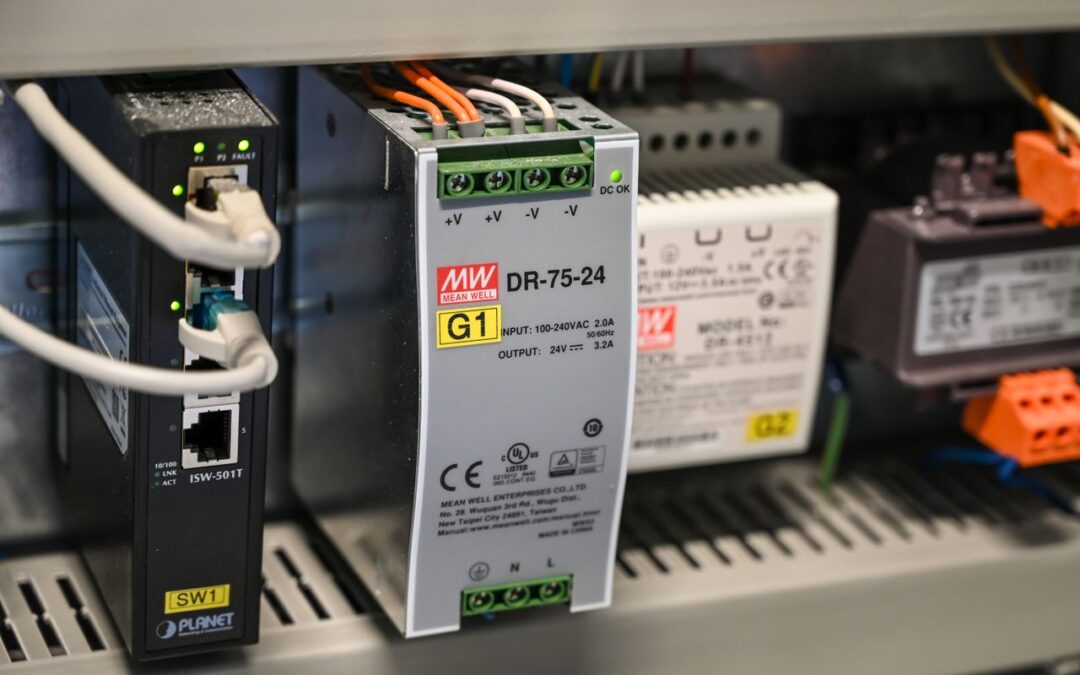
Many South African factories still rely on programmable logic controllers that were installed decades ago. The machines they control are often mechanically sound, but the control system behind them is ageing, unsupported and increasingly difficult to keep running.
A PLC upgrade is one of the most effective ways to protect production, cut maintenance costs and unlock efficiency gains that older controllers simply cannot deliver.
What Is a PLC Upgrade or Migration?
A PLC upgrade involves replacing an outdated controller, or parts of it, with current hardware and software. A migration goes a step further, moving the control logic, I/O and HMI from an obsolete platform onto a modern one.
In both cases, the goal is the same: keep the machine doing what it does well, while giving it a control system that is reliable, supported and ready for the future.
Signs Your PLC Needs Upgrading
Legacy controllers rarely fail without warning. Common signs that it’s time to act include:
- Spare parts are hard to find. If replacements only come from the second-hand market, a single failure could stop production for days or weeks.
- The manufacturer no longer supports it. Without firmware updates or technical backing, every fault becomes harder to resolve.
- Nobody fully understands the program. The original programmer may have moved on, and the electrical drawings may no longer match what’s in the panel.
- It can’t communicate with newer equipment. Older PLCs often struggle to connect with modern drives, sensors, HMIs and plant networks.
- Processing power is limited. Slow scan times and limited memory restrict what the machine can do.
- Security is a concern. Older platforms were never designed with today’s cybersecurity risks in mind.
The Benefits of a PLC Upgrade
Less unplanned downtime
The biggest risk of an obsolete controller is an unexpected breakdown with no quick fix. A modern PLC, backed by available spares and manufacturer support, greatly reduces that risk.
Newer controllers also offer advanced diagnostics, making it easier to pinpoint faults and, in many cases, spot problems before they cause a stoppage.
Lower maintenance costs
Keeping old systems alive becomes more expensive every year, from sourcing scarce parts to the time spent troubleshooting undocumented logic.
An upgraded system typically requires less upkeep and is easier for your own maintenance team to support, lowering the total cost of ownership over the life of the machine.
Higher productivity and efficiency
Faster processors and more memory allow tighter, more responsive control. This can mean shorter cycle times, more consistent product quality and less waste.
Where a production line has grown piece by piece over the years, a PLC upgrade is also an opportunity to properly synchronise separate sections, rather than relying on operators to coordinate them.
Better data and visibility
Modern PLCs make it far easier to collect, store and display production data. Automatic records replace handwritten logs, and real-time information on HMIs helps operators and managers make better decisions.
This data also supports energy monitoring, quality tracking and predictive maintenance.
Room to grow
A modern control platform makes it simpler to add new equipment later, whether that’s additional sensors for quality checks, new drives or automated handling. It also positions your operation for Industry 4.0 capabilities such as remote monitoring and analytics.
Choosing the Right Migration Strategy
There’s no single approach that suits every site. The right strategy depends on your budget, production schedule and long-term goals.
Direct replacement
The old controller is swapped for a current model while largely keeping the existing program structure. It’s a cost-effective option for smaller systems, though it may not take full advantage of modern features.
Phased migration
Components are upgraded in stages, keeping production running between each step. This works well for larger operations that cannot afford an extended shutdown.
Full system overhaul
The entire control system is replaced and redesigned. It requires a larger investment, but delivers the greatest gains in performance, scalability and future readiness.
How a PLC Upgrade Typically Works
A successful upgrade is about careful planning, not just new hardware. The process usually follows these steps:
- Assessment: Establish what the machine actually does and identify risks, weak points and goals.
- Planning: Select the new PLC, HMI and I/O, and plan how the control logic will be transferred.
- Design and build: Produce updated electrical drawings and build the new panel, pre-testing as much as possible off-site.
- Installation and commissioning: Install the system during a planned shutdown and keep downtime to a minimum.
- Testing and validation: Confirm the new system performs as required before handing over.
- Training and documentation: Make sure your team understands the new system and has accurate records to maintain it.
How Motion Tronic Can Help
Motion Tronic specialises in PLC and control system upgrades for machines that are mechanically sound but held back by obsolete controls.
We programme and commission Siemens, Mitsubishi, Allen-Bradley and Fanuc control systems, among others, and have migrated machines from outdated platforms onto current ranges such as the Siemens S7 family and Mitsubishi iQ-R series.
Every upgrade includes up-to-date electrical drawings produced in EPLAN P8, fully wire-numbered and referenced, so your team can maintain the system with confidence. We pre-build and pre-test off-site wherever possible, so your machine is down for as short a time as the job allows.
Where an upgrade also involves drives, motors or mechanical work, our retrofit, repair and on-site technical support teams can handle that too.
Conclusion
An ageing PLC is a risk that grows every year. A well-planned PLC upgrade reduces downtime, lowers maintenance costs and gives your operation the efficiency and flexibility needed to stay competitive.
If your production line is running on outdated controls, get in touch with the Motion Tronic team to discuss the right upgrade path for your machines.
FAQs
What is the difference between a PLC upgrade and a PLC migration?
A PLC upgrade generally refers to replacing or improving controller hardware or software. A migration involves moving the control system from an obsolete platform onto a new one, often including the logic, I/O and HMI.
How long does a PLC upgrade take?
It depends on the size and complexity of the system. Much of the work can be done off-site beforehand, so the actual machine downtime is often limited to a planned shutdown window.
Can a PLC be upgraded without replacing the whole machine?
Yes. In most cases, the mechanical equipment can stay in place and only the control system is replaced, making a PLC upgrade far more cost-effective than buying new machinery.